


What Are the Benefits of Raised Edge Car Floor Mats?
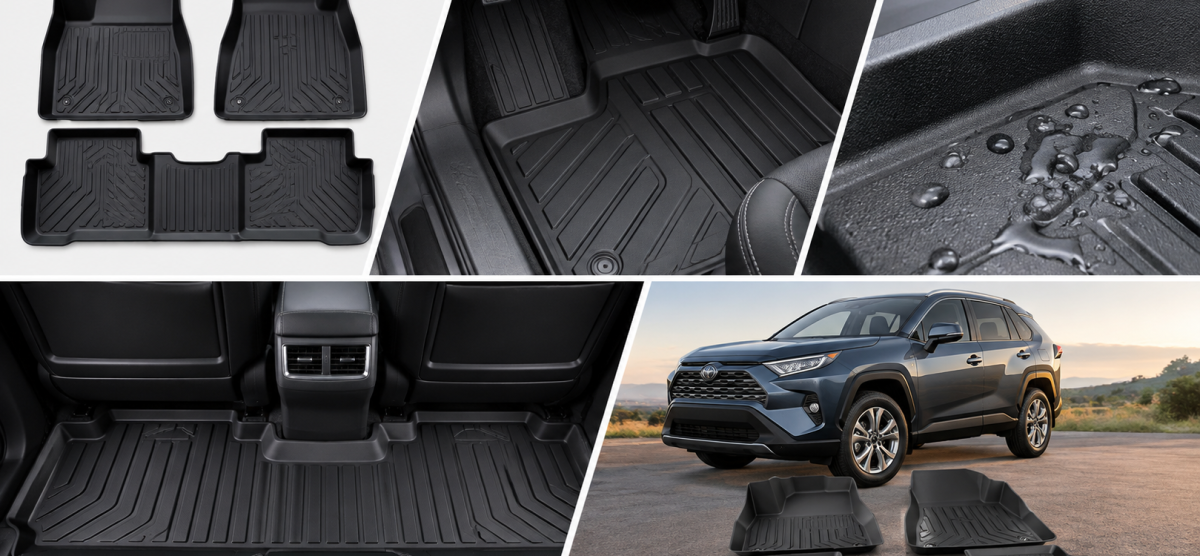
Muddy boots after a weekend hike, wet thongs after the beach, a coffee that tips over on a sharp turn. Every Australian driver knows how quickly the footwell turns into a mess. Standard flat mats let that mess slide straight onto the carpet underneath. Raised edge car floor mats take a different approach: they work like a shallow tray and hold dirt, water and spills in place until you tip them out. This guide explains how raised edge car floor mats work, what benefits they offer, how they compare with flat mats and what to check before you buy.
What Are Raised Edge Car Floor Mats?
Raised edge car floor mats (also called raised edge floor mats or car floor mats with raised edges) have a lip around the perimeter. The lip rises above the base of the mat and forms a low wall. Flat mats lie level with the floor, so liquid and debris can run off the sides. Most raised edge designs are moulded to the shape of a specific vehicle’s footwell. That vehicle-specific shape matters as much as the edge. The mat follows the contours of the floor, so the raised border sits against the sill and centre console instead of leaving gaps. Many all-weather options use TPE (thermoplastic elastomer), a flexible, rubber-like material that suits moulded mats.
6 Key Benefits of Raised Edge Car Floor Mats
Better Protection Against Water and Liquid Spills
Water behaves differently on a flat surface and in a tray. On a flat mat, it spreads and finds the edges. On a raised edge mat, it pools inside the border. A wet umbrella, a drink bottle that leaks or rain dripping off your clothes stays on the mat instead of soaking into the carpet. Pooled water still needs attention. Empty the mat when you can, because liquid left to sit can create damp and odours.
Helps Keep Mud, Dirt and Sand Contained
Beach trips, building sites, farm gates and dirt tracks all put loose debris on your shoes. The raised border catches much of it before it reaches the carpet. Sand is the classic example: once it works into carpet fibres, it takes a lot of vacuuming to remove. On a raised edge mat, you can tip most of it straight out of the door.
Protects Your Vehicle’s Original Carpet
Your factory carpet takes the most abuse under the driver’s heel and around the door sill. Better footwell coverage reduces how much dirt and moisture reaches those areas. That helps limit stains, grit build-up and wear over time. A cleaner original carpet also helps when you sell or trade in the car, because buyers notice the footwell.
Easier Cleaning and Maintenance
You can lift the mats out, shake them, rinse them with a hose and let them dry. That takes a few minutes. Vacuuming fixed carpet takes far longer, and it rarely removes everything. For a deeper clean, use mild soapy water and a soft brush, then dry the mat fully before you refit it. Check the manufacturer’s care instructions for the specific product.
Improved Footwell Coverage
Universal mats often leave bare patches near the sills, the centre tunnel and the sides of the pedal area. A vehicle-specific mat with raised borders covers more of that space. It also stays in position better, because the shape matches the floor instead of sliding over it. If you want this level of fit, browse custom-fit car floor mats made for your make and model.
Practical for Everyday and All-Weather Driving
Australian conditions swing from monsoonal downpours to red dust and beach sand. A raised edge design handles all of it without a change of mat. You don’t need a winter set and a summer set. The same mat serves the school run, the weekend camping trip and the wet commute, which makes all-weather car floor mats a practical choice for most households.
How Do Raised Edges Improve Car Interior Protection?
The edge, the shape and the coverage work as a system. The raised border holds the mess. The moulded shape keeps the border where it needs to be. The coverage area decides how much carpet stays protected.
A few real-world examples show how this plays out:
- The wet-weather commute: Rain runs off your shoes and pools in the mat’s border instead of creeping toward the carpet near the door.
- The sandy beach run: Sand collects inside the mat. You tip it out at home instead of vacuuming the carpet for twenty minutes.
- The kids’ back seat: A spilt drink or a dropped snack stays within the rear mat’s border, so you can wipe it up.
- The tradie’s ute: Dirt, sawdust and wet boots stay in the mat, not in the carpet underneath.
The same thinking applies to the rear of the vehicle. If you carry wet gear, pets or tools, 3D/5D car boot liners give the boot floor the same tray-style protection. Understanding the difference between a car boot mat and boot liner helps you decide what the boot needs, because footwell and boot protection solve slightly different problems.
Raised Edge Car Floor Mats vs Standard Flat Floor Mats
Both types have a place. This comparison shows where each one fits.
| Factor | Raised edge mats | Raised edge mats |
| Edge design and coverage | Raised border; usually moulded to the vehicle | Flat; often universal or loosely shaped |
| Containing water and dirt | Holds liquid and debris within the border | Liquid and debris can run off the edges |
| Cleaning | Remove, tip out and rinse | Shake and vacuum; fabric types can hold stains |
| Everyday practicality | Suits messy, wet or sandy conditions | Suits light, dry use |
| Driving conditions | Handles rain, mud, sand and spills | Works best in clean, dry conditions |
Flat carpet mats can look neat and feel soft, which some drivers prefer for a dry, city-based routine. Raised edge mats trade some of that plush feel for containment. The right choice depends on your vehicle, the available fitment and how you use the car.
What Should You Look for When Choosing Raised Edge Car Floor Mats?
Check these points before you buy:
- Vehicle-specific fitment. Match the mat to your exact make, model, year and drive configuration. A mat that almost fits will shift or leave gaps.
- Raised edge design and coverage. Look at how far the border extends and whether it follows the sills and centre console.
- Material quality. Many drivers choose TPE because it stays flexible and cleans easily. If you’re weighing materials, read this comparison of TPE vs rubber car mats.
- Non-slip design and secure retention. The mat should grip the floor and, where your vehicle has them, use the factory retention points.
- Ease of cleaning. A smooth, moulded surface makes rinsing and drying quicker.
- Proper fit around the pedals. Check this one carefully.
Safety first: A floor mat must never interfere with the accelerator, brake or clutch pedal. Fit the mat flat, secure it as intended and test full pedal travel before you drive. Never stack one mat on top of another. If a mat moves or rides up, stop and refit it. Also check that the raised border doesn’t foul the seat rails when you adjust the seat.
Are Raised Edge Car Floor Mats Worth It?
For many drivers, yes. If you regularly deal with mud, sand, rain or spills, the containment alone saves time and protects the carpet you can’t easily replace. Families, tradies, beachgoers, pet owners and anyone who drives on dirt roads benefit most.
If you drive a short, dry commute and keep the cabin spotless, a quality flat mat may do the job. For everyone else, a well-fitted raised edge mat is a practical, low-effort upgrade.
Final Thoughts
Raised edge car floor mats keep water, mud, sand and spills contained, make cleaning faster and protect your original carpet. Choosing the right fitment and design matters just as much as the raised border. A mat that fits properly stays put, covers the footwell and keeps the pedals clear. Ready to protect your footwells? Explore Vehiclab’srange of 3D/5D car floor mats and find a fit for your vehicle.
Frequently Asked Questions
What are raised edge car floor mats?
Raised edge car floor mats have a lip around the border that holds water, dirt and spills on the mat. Most are moulded to fit a specific vehicle’s footwell.
Do raised edge car mats prevent water from reaching the carpet?
They help significantly. The border holds liquid on the mat, so less reaches the carpet. A very large spill, or a poorly fitted mat, can still allow some water through, so correct fitment matters.
Are raised edge floor mats better than standard floor mats?
For containing mess, usually yes. For a soft, plush feel in a clean, dry car, some drivers prefer flat carpet mats. Your driving conditions should guide the decision.
Can raised edge mats help contain mud and sand?
Yes. The border traps loose debris on the mat, and you can tip it out and rinse the mat clean.
Are TPE raised edge car mats easy to clean?
Yes. You can usually remove them, shake them out, rinse them with water and let them dry. Always follow the maker’s care instructions.
Do raised edge car floor mats fit every vehicle?
No. Fit depends on make, model, year and drive configuration. Choose a mat made for your specific vehicle and confirm that it sits securely without touching the pedals.