


Auto Car Mats for Australian Summers and Winters: A Buying Guide
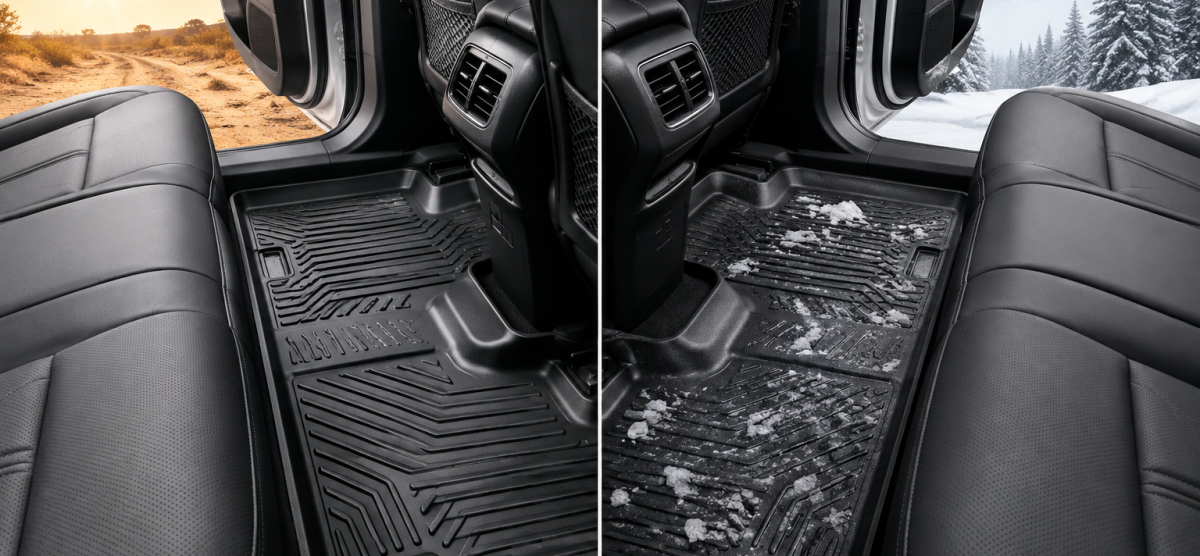
Quick Answer: The best auto car mats for Australia are made from TPE, which resists cracking above 40°C and stays pliable down to around -20°C, well beyond what most cabins ever experience. Paired with a custom fit and raised edges, this combination copes with summer heat and winter rain without degrading.
Australian weather doesn’t give your car much of a break. Summer dashboard temperatures regularly hit 70–80°C in direct sun, which means the floor mats sitting nearby are absorbing serious heat for hours at a time. Winter brings a different problem — cold mornings, condensation, and sudden downpours depending on where you live. Your floor mats sit right in the middle of all of it, and cheap ones simply don’t hold up.
Choosing the right auto car mats comes down to two things: the material’s ability to handle temperature extremes, and how well the mat actually fits your vehicle. Here’s what to look for on both fronts.
How Australian Weather Actually Affects Car Mats
Unlike more consistent climates overseas, Australia swings between extremes, sometimes within the same week. That variation puts measurable stress on lower-quality materials:
- Heat – Standard PVC or thin rubber mats can start softening and releasing plasticiser around 60°C, a temperature a black car mat in direct sun can exceed within an hour on a 35°C day
- UV exposure – Without UV stabilisers built into the material, mats fade and turn brittle after roughly 12–18 months of regular sun exposure
- Cold – Rigid rubber compounds have a glass transition point that makes them stiffen and crack more easily below around 5°C, common on winter mornings in Victoria, Tasmania, and the ACT
- Humidity – Trapped moisture under a mat that doesn’t drain properly can lead to mould within days in humid coastal climates like Queensland
Why TPE Outperforms Rubber and Carpet in Both Extremes
TPE (thermoplastic elastomer) is the material behind most premium car floor liners for a specific reason: it has a lower glass transition temperature than standard rubber, so it stays flexible in cold conditions instead of hardening. At the other end, TPE typically tolerates sustained heat up to around 90–100°C before any structural change, comfortably above what a car interior reaches even when parked in full sun.
That combination is why TPE mats hold their shape and colour longer than PVC or basic rubber alternatives, which tend to show visible wear — curling edges, fading, a slightly tacky surface — within the first year or two of Australian conditions.
Getting the Fit Right Matters as Much as the Material
Material only solves half the problem. A mat that shifts, bunches, or leaves gaps at the edges lets water and dust through no matter what it’s made from.
Custom car floor liners are moulded to your vehicle’s exact footwell, which keeps the mat anchored to factory retention points and closes off the gaps where universal mats typically fail. If you want the reasoning behind this in more detail, our guide on thebenefits of choosing custom-fit car floor mats in Australia breaks down the fit differences directly. It’s also worth reading our breakdown ofcommon floor liner buying mistakes Australian drivers make, since fit issues are the most frequent complaint we see from buyers who went generic.
Ready to fit your car properly? BrowseVehiclab’s TPE-based 3D and 5D floor mats, built for the exact temperature range Australian cars deal with year-round.
Maintenance Tips for All-Season Performance
- Clean mats every two to three weeks, more often during wet months
- Let them dry fully before refitting to prevent trapped moisture
- Check retention clips periodically, especially after heavy use in wet weather
- Avoid parking with damp mats still inside for long periods, since trapped humidity is what typically triggers mould growth
Final Thoughts
Choosing the right auto car mats means looking past the price tag and checking what the material can actually handle. TPE’s resistance to both heat above 40°C and cold below 5°C makes it the more reliable choice for most of Australia, and pairing that with a proper custom fit closes the gaps that cause premature wear. If you’re after mats genuinely built for these conditions, it’s worth browsing Vehiclab’s 3D and 5D car floor mats range to find the right fit for your vehicle.
Frequently Asked Questions
What temperature can TPE car mats withstand before they’re damaged?
Quality TPE typically holds up to around 90–100°C without softening or losing shape, well above the 70–80°C a dark-coloured mat can reach in direct summer sun.
Why do rubber car mats crack in Victorian or Tasmanian winters but TPE doesn’t?
Standard rubber has a higher glass transition temperature, meaning it stiffens and becomes brittle below around 5°C. TPE’s lower glass transition point keeps it pliable at the same temperature.
How long do cheap PVC mats last in the Australian sun before fading or cracking?
Without UV stabilisers, PVC and basic rubber mats commonly show fading, brittleness, or cracking within 12 to 18 months of regular sun exposure.
Can a custom-fit mat actually prevent mould compared to a universal one?
Yes — a mat that seals against factory retention points drains and dries more evenly, reducing the day’s moisture sitting trapped underneath compared to a loose-fitting universal mat.
Is TPE noticeably better than rubber, or is the difference mostly marketing?
The difference is measurable, not just marketing: TPE’s combined heat tolerance (up to ~90–100°C) and cold flexibility (down to around -20°C) covers a far wider range than standard rubber compounds typically manage.