


TPE vs EVA Car Mats: Which Material Offers Better Protection?
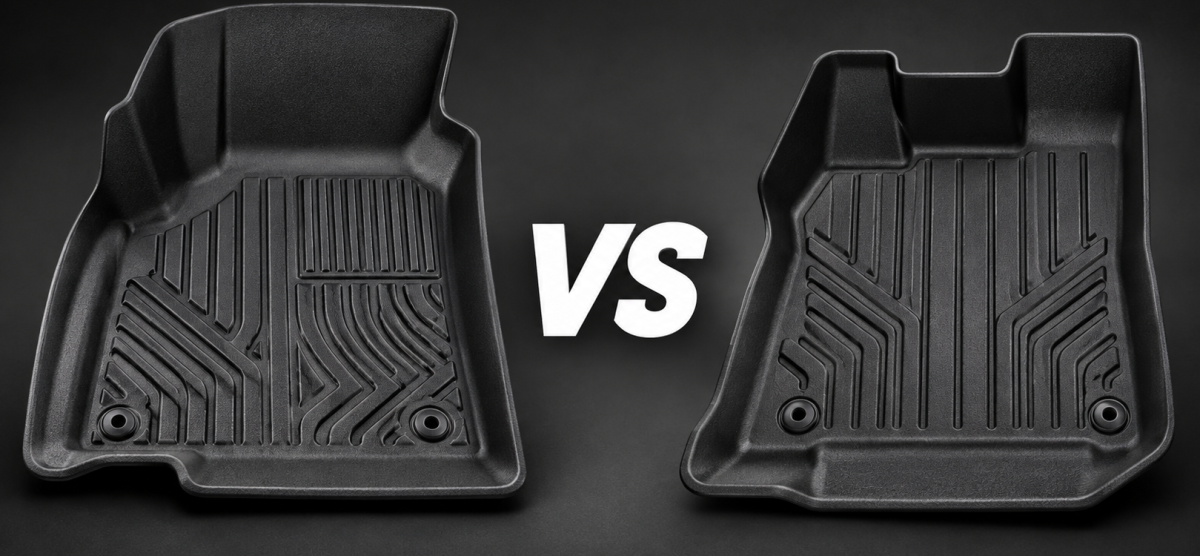
Your car’s carpet takes a beating. Sand from the beach, red dirt from a weekend away, spilt coffee on the school run, wet boots after a downpour. In Australia, the footwell cops all of it, and once grime and moisture soak into the factory carpet, they’re hard to get out. A good set of floor mats is the cheapest way to keep that carpet in shape and protect your resale value.
But the material matters. If you’ve been researching TPE vs EVA car mats, you’ve probably noticed that both get described as tough, waterproof and easy to clean. They’re not identical, though. Each material behaves differently underfoot, handles heat and wear differently, and suits different drivers.
This guide breaks down how the two compare, so you can pick the right one for your car and the way you drive.
What Are TPE and EVA Car Mats?
Before comparing them, it helps to know what each material actually is.
TPE car floor mats
TPE stands for thermoplastic elastomer. It’s a material that blends the flexibility of rubber with the processing qualities of plastic. Manufacturers can mould it into precise shapes, which is why TPE car floor mats are often made as 3D or 5D designs with raised edges that follow the contours of the footwell.
TPE has a firm but flexible feel. It bends without cracking, springs back into shape and has a slightly grippy surface. You’ll commonly find it used in all-weather car mats, boot liners and other products that need to handle moisture and regular wear.
EVA car mats
EVA stands for ethylene vinyl acetate. It’s a lightweight, foam-like copolymer, also used in shoe soles, yoga mats and sports padding. As a car mat material, EVA feels softer and more cushioned than TPE.
Because it’s light and easy to cut and shape, EVA is popular for budget-friendly and universal-style mats, as well as some custom-cut designs. Many EVA mats have a textured or patterned top surface to add grip and visual interest.
TPE vs EVA Car Mats: A Detailed Comparison
Here’s how the two materials stack up across the things that matter most to car owners.
Material composition and construction
TPE is a denser, more rubber-like material. It’s typically moulded or formed into a single piece with a defined shape, often including a raised lip around the edges to hold spills and debris.
EVA is a foam-based material. It tends to be lighter and more cushioned, and it’s often cut or pressed into shape. Construction varies a lot between brands, so two EVA mats can feel quite different depending on thickness and density.
Durability and flexibility
TPE is known for staying flexible through everyday use. It handles repeated flexing, boot scuffs and heel pressure well, and it generally resists cracking. That’s one reason people looking for durable car floor mats often lean towards TPE.
EVA can also wear well, but its softer, foam structure means it’s more prone to compression, scuffing or marking under constant heel pressure, especially at the driver’s footwell. Higher-density EVA holds up better than thin, low-density versions, so quality counts here.
Neither material is indestructible. How long a mat lasts depends on the quality of the product, the thickness, how often you use the car and how it’s treated.
Water and moisture resistance
Both materials are non-absorbent, so neither soaks up water like a carpet does. That makes both useful as waterproof car mats in practical terms: liquid sits on top rather than soaking in.
What really decides whether water stays off your carpet is the mat’s design. A mat with raised edges and a close fit to the footwell contains spills far better than a flat mat, whatever it’s made from. If you’ve ever tipped a wet umbrella onto a flat mat and watched the water run off the side, you know what we mean.
Resistance to dirt, mud and everyday spills
Both TPE and EVA handle dirt, mud and spills better than fabric mats. The difference comes down to surface and shape.
TPE mats with deep channels and raised sides tend to trap mud, sand and water well. EVA mats with textured surfaces can hide dirt nicely, but fine sand can settle into patterned surfaces and take a little more effort to clear.
Cleaning and maintenance
Both are straightforward to look after. For either material, you can usually take the mat out, shake off loose dirt, then wipe or hose it down. A mild soapy solution handles stubborn marks.
TPE’s smoother, denser surface generally wipes clean quickly. EVA’s lighter, more textured surface may need a soft brush for fine grit. It’s also worth checking the manufacturer’s care instructions before using strong chemical cleaners on either material.
Comfort and practicality
This is where EVA has a genuine advantage for some drivers. The softer, cushioned feel underfoot is pleasant, and the lighter weight makes the mats easy to lift out and refit.
TPE feels firmer, but it also tends to feel more stable and planted under the pedals. For drivers who spend a lot of time behind the wheel, that stability can be a plus. It comes down to personal preference.
Fitment, shape retention and interior coverage
TPE holds its moulded shape well, which is why it’s a popular choice for vehicle-specific mats that follow the exact curves of the footwell. A well-made TPE mat sits flat, stays in place and offers wide coverage up the sides and across the transmission tunnel.
EVA can be cut to fit, too, but because it’s softer, it may curl at the edges or lose some of its shape over time, especially in very hot conditions. Again, the thickness and quality of the product make a big difference.
Suitability for different driving conditions
For city commuting, both materials do the job. For heavy use, wet weather, muddy tracks or sandy trips, a mat with firm raised edges and a precise fit will protect your carpet best. For light use where comfort matters most, EVA can be a perfectly reasonable option.
TPE vs EVA Floor Mats at a Glance
| Feature | TPE | EVA |
| What it is | Thermoplastic elastomer, a rubber-like, flexible material | Ethylene vinyl acetate, a lightweight foam-like material |
| Feel underfoot | Firmer and more stable | Softer and more cushioned |
| Weight | Generally heavier | Generally lighter |
| Flexibility | Flexible, tends to hold its shape | Flexible, but softer and more prone to compression |
| Water resistance | Non-absorbent, works well with raised edges | Non-absorbent, works well with raised edges |
| Dirt and mud | Deep channels and edges trap debris well | Textured surfaces can hide dirt but may hold fine grit |
| Cleaning | Wipes or hoses clean easily | Easy to clean, may need a brush for textured surfaces |
| Shape retention | Strong, especially in moulded 3D/5D designs | Varies with thickness and density |
| Typical use | All-weather, heavy-use and custom-fit mats | Lighter-use, budget and comfort-focused mats |
This table is a general guide. Individual products vary depending on the manufacturer, thickness and design.
Which Material Suits Australian Drivers?
Australian conditions are tough on car interiors. One day it’s 38 degrees and dusty, the next you’re driving through a storm. Here’s how each material fits different lifestyles.
Everyday commuting. Both work well. If you want something that stays put, wipes clean in seconds and handles wet shoes in winter, a close-fitting TPE mat is a sensible pick. If you prefer a softer feel and mostly drive on dry days, EVA is fine.
Road trips and outdoor activities. Long drives mean more dirt, more spills and more wear. TPE’s firm edges and shape retention suit the job, particularly when you’re jumping in and out with muddy boots or camping gear.
Beach visits. Sand gets everywhere. Deeper channels and raised sides help trap it before it reaches your carpet. After a beach day, you simply lift the mat out, tip out the sand and rinse it off.
Hot summers. Cars parked in the sun can get extremely hot inside. Any mat material can be affected by heat over time, and softer foam-based materials may be more likely to lose their shape. Choosing a quality product from a reputable supplier helps either way.
Overall, TPE is a strong fit for Australian drivers who want maximum footwell coverage and consistent shape retention. EVA suits those who prioritise comfort and light weight and don’t need heavy-duty protection. If you’d like to see how TPE compares with another common material, our post onTPE vs rubber car mats covers that in detail.
Why Custom-Fit Floor Mats Make a Difference
Material is only half the story. A premium mat that doesn’t fit your car properly won’t protect it properly, and a universal mat that’s too small leaves gaps where dirt and water get through.
Vehicle-specific mats are designed around the exact footwell of your make and model. That brings a few real advantages:
- Full coverage. The mat reaches the edges of the footwell, so there’s less exposed carpet.
- A secure fit. Proper alignment with factory anchor points helps stop the mat shifting under the pedals, which is also a safety consideration.
- Contained spills. Raised edges that match the footwell shape hold liquid and debris instead of letting it run onto the carpet.
- A cleaner look. Custom-fit mats look like part of the interior rather than an afterthought.
This is the idea behind 3D and 5D mats. If you’d like to understand what those terms mean and what to look for, our 5D car floor mats buying guide explains the features in plain language. Owners of electric vehicles can also check out our range of TPE 5D car mats for BYD and Tesla.
How to Choose the Right Car Floor Mats
With so many options out there, it helps to work through a few simple questions.
Start with your vehicle
Check whether mats are made for your exact make, model and year. A proper fit beats a cheaper universal option nearly every time.
Think about your lifestyle
Do you head to the beach, go camping or carry pets and kids? Heavier use calls for a firmer, higher-coverage mat. If your car mostly handles short, dry trips, you might not need the same level of protection.
Consider how you like to clean
If you want a quick wipe or hose-down, pick a mat with a smooth, easy-to-clean surface. If you don’t mind a bit of extra effort for a softer feel, that opens up more choices.
Decide how much protection you want
For families, tradies and outdoor lovers, deep edges and full footwell coverage are worth prioritising. Don’t forget the back of the car, either. If you carry gear in the boot, matching 3D/5D car boot liners can protect that space too.
Check the details
Look for clear information on thickness, fitment, anchor points and care instructions. Be wary of vague claims. A trustworthy supplier explains what the product is, rather than promising things that can’t be guaranteed.
Final Thoughts: TPE vs EVA Car Mats
The TPE vs EVA car mats question doesn’t have one right answer. EVA offers comfort and light weight, which suits casual drivers and dry-weather commuting. TPE offers firmness, shape retention and strong edge coverage, which makes it a better match for families, adventurers and anyone who wants dependable footwell protection year-round.
If your priority is custom-fit coverage that handles beach sand, muddy boots and wet weather, TPE car floor mats are a sensible place to start. Browse Vehiclab’s range of 3D/5D TPE mats to find a set made for your vehicle, and learn more about Vehiclab and what we do.
Frequently Asked Questions
What is the difference between TPE and EVA car mats?
TPE is a flexible, rubber-like material that’s usually firmer and holds its moulded shape well. EVA is a lightweight, foam-based material that feels softer and more cushioned. Both can work as all-weather car mats, but they differ in feel, weight and how well they keep their shape over time.
Are EVA car mats waterproof?
EVA doesn’t absorb water, so liquid sits on the surface rather than soaking through. That said, how well a mat keeps water off your carpet also depends on its fit and edge design. A mat with raised sides and a close fit will do a better job than a flat one.
Are TPE car mats more durable than EVA mats?
TPE is generally firmer and tends to hold up well to heel pressure and regular use, while softer EVA mats can compress or scuff more easily. Durability still depends on the quality, thickness and design of each product, so it’s worth comparing individual mats rather than relying on material alone.
Which car mat material is easier to clean?
Both are easy to clean compared with carpet mats. TPE’s smoother surface usually wipes down quickly, while textured EVA mats may need a soft brush to remove fine sand or grit.
Which material is better for Australian driving conditions?
For most Australian drivers dealing with sand, mud, heat and sudden rain, a close-fitting TPE mat is a practical choice thanks to its shape retention and edge coverage. EVA can still suit lighter-use drivers who prefer a softer feel.